Oncology
Horses are commonly affected by skin cancer, with sarcoids, squamous cell carcinoma, and melanoma occurring most frequently. The internal medicine and surgery team at the Equine Medical Center uses a combination of chemotherapeutic agents, surgical excision, and laser ablation to treat all types of skin tumors in horses.
Skin cancer requires prompt treatment in order to maximize the chance of success. If you think that your horse might have a skin tumor, contact your primary care veterinarian or make an appointment for evaluation and treatment at the Equine Center.
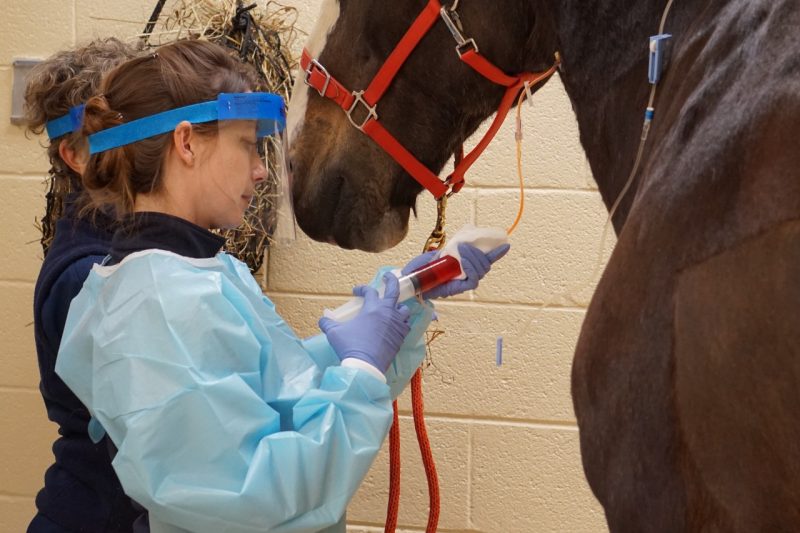
In recent years, the equine medicine community has made great strides in diagnosing and treating systemic cancer in horses. Clinical signs of systemic cancer, which can be subtle in horses, may include lethargy, poor appetite, and weight loss. Equine Center internal medicine faculty member, Krista Estell, has a special interest in equine oncology and has treated several horses with systemic cancer, including lymphoma and metastatic squamous cell carcinoma.
Treatment often consists of a combination of laser-assisted surgical excision and ablation, along with intralesional and topical chemotherapeutic agents. The local delivery of chemotherapy drugs avoids the many side effects commonly associated with their systemic use.
More versatile than a scalpel, surgical lasers deliver light or heat to incise, coagulate, or vaporize tissue. The advantages of laser surgery for treating tumors include the following:
- Laser surgical sites experience less bleeding and swelling than conventional surgical wounds. The carbon dioxide laser creates a clean, bloodless incision and can also vaporize tissue masses.
- The carbon dioxide laser is controlled enough that corneal tumors can be vaporized from the surface of the eye.
- Surgical procedures performed with lasers can often be performed on standing horses on an outpatient basis. Horses treated by this method leave with no external wound.
Appointments and referrals: 703-771-6800
To schedule an appointment, refer a patient, or inquire about our clinical services, please call 703-771-6800 or email emcinfo@vt.edu.